
What to Eat in Hong Kong: Must-Try Local Food
Hong Kong is one of the most exciting food cities in the world. But eating here is not just about flavor — it’s about understanding the culture, history, and daily life of the people who live here.
Because of its roots as a fishing village, its time as a British colony, and its role today as a global city, Hong Kong’s food reflects a unique mix of Cantonese traditions and Western influence. Every dish tells a story about migration, trade, family, and survival in a fast-moving city.
If you truly want to experience Hong Kong beyond the skyline, local food should be at the top of your Hong Kong to-do list.
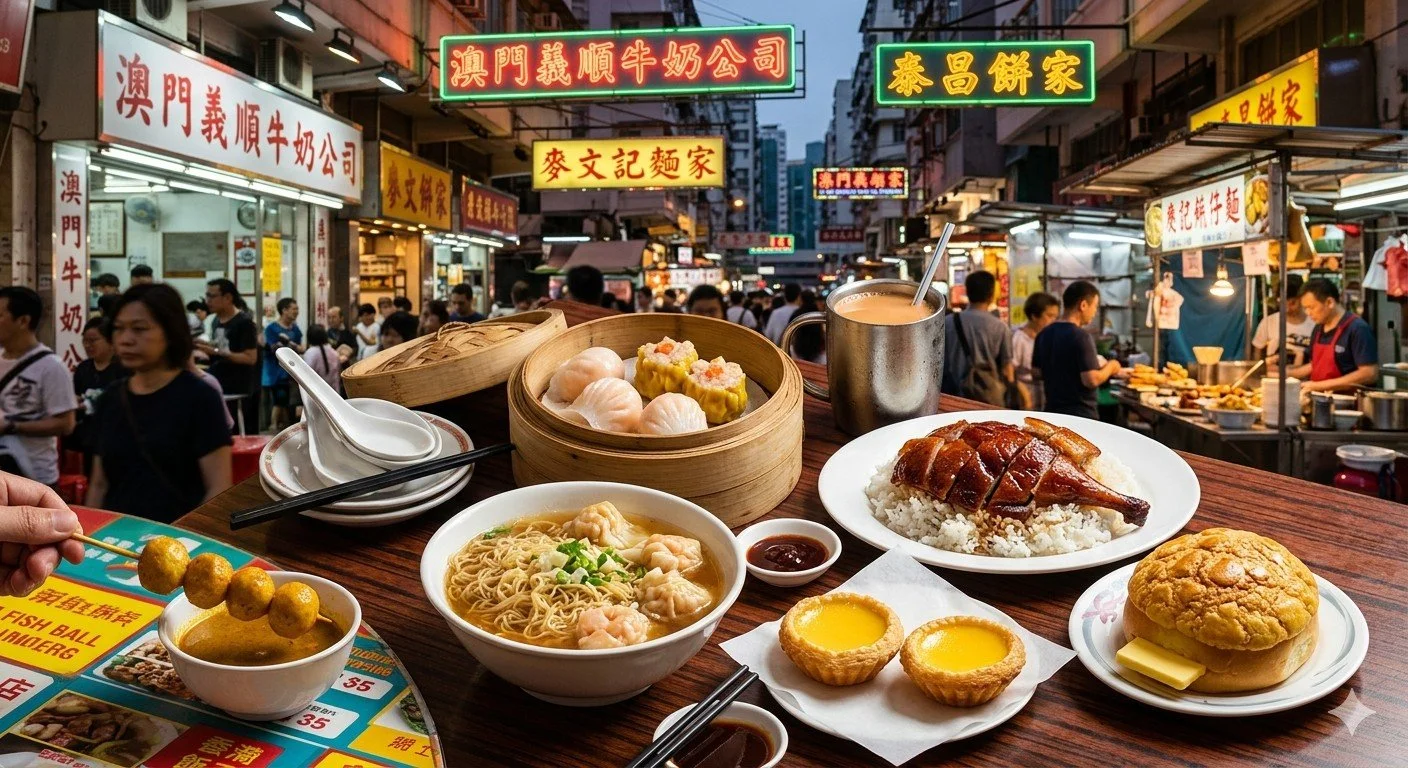
AI generated photo for illustration purposes.
Dim Sum – The Heart of Cantonese Food Culture
Dim sum is more than just dumplings. It is a social tradition called “yum cha,” which means “drink tea.” Families and friends gather around round tables, sharing small dishes while drinking Chinese tea and catching up.
This tradition dates back hundreds of years to teahouses along trading routes in southern China. Over time, it became an important part of Cantonese culture.
When you eat dim sum, notice the craftsmanship:
The thin, delicate skin of shrimp dumplings
The balance of sweet and savory in BBQ pork buns
The freshness of steamed rice rolls
Why you must try it:
Dim sum shows you how Hong Kong people connect — through sharing food. It’s about community, not just eating.
Roast Goose – A Cantonese Culinary Art
Roast goose is one of the most respected dishes in Cantonese cuisine. The preparation process is detailed and precise. The goose is marinated, air-dried, and roasted at high heat to create crispy skin while keeping the meat juicy and tender.
This dish is often ordered for celebrations and special gatherings.
Why you must try it:
Roast goose represents skill and tradition. It’s not fast food — it’s culinary heritage.
Wonton Noodle Soup – Everyday Hong Kong in a Bowl
Wonton noodle soup may look simple, but it reflects Hong Kong’s attention to detail.
The broth is clear yet rich, usually made from pork bones and dried seafood. The noodles are thin and slightly firm. The wontons are filled mostly with shrimp, giving them a fresh and slightly sweet taste.
This dish became popular because it was affordable, comforting, and quick — perfect for a busy city.
Why you must try it:
It’s what locals actually eat on a normal day. It gives you a real taste of everyday Hong Kong life.
If you want to explore traditional wonton noodles, milk tea, and classic local snacks in a deeper way, you can join our Hong Kong Island Food Tour. With a fun and knowledgeable local guide, you’ll not only taste the dishes but also learn the history and cultural stories behind them.
Hong Kong-Style Milk Tea – East Meets West in a Cup
Hong Kong milk tea was influenced by British afternoon tea culture. During colonial times, locals adapted the practice by creating a stronger, bolder tea that suited Cantonese tastes.
The tea is brewed from strong black tea leaves and filtered through a cloth bag, creating a smooth texture. Evaporated or condensed milk is added to make it creamy and rich.
Locals drink it for breakfast, during lunch, or as an afternoon break.
Why you must try it:
It perfectly represents Hong Kong’s East-meets-West identity.
To truly understand how milk tea became part of local life, join our Hong Kong Island Food Tour, where you can taste it while learning about Hong Kong’s colonial history and café culture from an engaging local guide.
Egg Tarts – A Colonial Dessert with a Local Twist
Egg tarts are another example of British influence transformed by Hong Kong bakers. Inspired by custard tarts, Hong Kong versions became lighter, less sweet, and uniquely local.
There are two common styles:
Buttery shortcrust pastry
Flaky puff pastry
The custard filling is silky and slightly sweet. They are best eaten warm and fresh.
Why you must try it:
It shows how Hong Kong adapts foreign ideas and makes them its own.
On our Hong Kong Island Food Tour, you can enjoy freshly baked egg tarts while learning how colonial history shaped local desserts — all while exploring lively neighborhoods with a friendly, fun guide.
Street Food – The Energy of the City
Hong Kong is famous for its street food culture. In busy neighborhoods and night markets, you’ll find snacks like:
Curry fish balls
Egg waffles
Grilled seafood
Stinky tofu
Street food became popular because many Hong Kong homes were small, and families often ate outside. Over time, eating out became part of daily life.
Why you must try it:
Street food connects you to the rhythm of the city — loud, vibrant, and full of character.
Experience Hong Kong Through Food
Hong Kong has thousands of food options. But without local knowledge, you might miss the hidden stories behind the dishes.
Food here reflects:
Trade and migration
Colonial history
Family traditions
Modern city life
If you want more than just tasting — if you want in-depth learning, cultural insights, and a guided food experience with a fun local guide — our Hong Kong Island Food Tour is a great way to explore.
Because in Hong Kong, food is not just something you eat It’s something you experience.