
Long Ke Wan Beach Guide for First-Timers
Long Ke Wan Beach Guide for First-Timers
Most visitors arrive in Hong Kong expecting skyscrapers and dim sum, and leave without realising that roughly three-quarters of the territory is countryside. Long Ke Wan (浪茄灣) is the strongest argument for that second Hong Kong: a crescent of white sand and turquoise water tucked into Sai Kung East Country Park, regularly described as the most beautiful beach in the city and frequently compared to the Maldives.
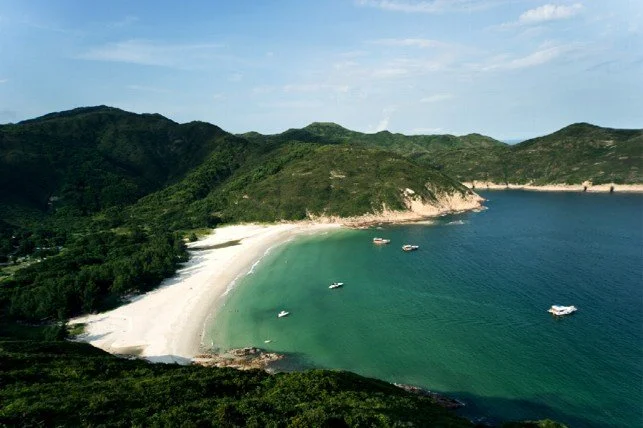
It is also, deliberately, not easy to reach. There is no road to the sand, no shop, no restaurant and no lifeguard. That inaccessibility is precisely what has kept it pristine. Here's what a first-timer needs to know.
Where Is Long Ke Wan?
Long Ke Wan sits on the eastern edge of the Sai Kung Peninsula, facing directly out to the South China Sea. It lies just beyond the High Island Reservoir East Dam, at the point where Stage 1 of the MacLehose Trail ends and Stage 2 begins.
The beach is sheltered between headlands, which gives it unusually calm, clear water for an ocean-facing bay. Behind it sits an official government campsite, and beyond that, hills that rise steeply in every direction. There are no buildings in view from the sand.
How to Get to Long Ke Wan
There are three realistic options, and the right one depends on how much you're carrying and how much walking you want to do.
Option 1: Taxi to East Dam, then hike down (most popular)
From Sai Kung town, take a green New Territories taxi from the rank near the pier and ask for the High Island Reservoir East Dam. The ride takes roughly 30 minutes and typically costs in the region of HK$100–150 each way.
From the dam, look for the signpost marked Long Ke Wan and follow the trail down. The descent takes about 20 to 35 minutes on a mostly clear path. It is not stroller-friendly and involves a proper uphill return on the way back.
Option 2: Speedboat from Sai Kung Pier (easiest)
Boat operators work directly from the Sai Kung waterfront, and a one-way trip runs roughly HK$100–150 depending on season and demand, taking 20 to 30 minutes. The major advantage is that the boat drops you on the sand itself, ideal if you're carrying camping gear or travelling with young children.
Two caveats. Book your return when you arrive, since demand outstrips supply at weekends. And be aware the crossing can be choppy; anyone with back problems or who is pregnant should consider the taxi route instead. Boats also don't run in strong wind.
Option 3: Full hike from Pak Tam Chung (for hikers)
Take Bus 94 from Sai Kung Bus Terminus, or Bus 96R from Diamond Hill MTR on Sundays and public holidays, and get off at Pak Tam Chung. From there, follow the MacLehose Trail signage along Man Yee Road past the reservoir to the East Dam and down to the beach.
Allow two to three hours each way. The scenery along the reservoir is genuinely superb, but there is almost no shade on this route.
What You'll Find When You Arrive and What You Won't
Set expectations correctly and Long Ke Wan is close to perfect. Arrive expecting a resort beach and you'll struggle.
What's there:
Fine white sand and exceptionally clear water
An official AFCD campsite with basic pitches
Dry pit toilets
A seasonal stream as a water source, not suitable for drinking untreated
What's not there:
Any shop, kiosk, restaurant or vending machine
Lifeguards or shark nets
Showers or changing rooms
Reliable mobile signal in places
Rubbish bins (everything you bring must leave with you)
What to Pack
Because there is no resupply, packing well is the single most important part of the trip.
Water. Two to three litres per person minimum in warm months.
All food for the day, bought in Sai Kung town beforehand.
Sun protection. The beach and the trail are both fully exposed; a hat is not optional in summer.
Proper footwear with grip for the descent and climb back.
A dry bag if you're arriving by speedboat.
A rubbish bag to carry your waste out.
A head torch if you're camping or leaving at dusk.
Things to Do at Long Ke Wan
Long Ke Wan is not a beach with an activities desk. What it offers instead is a handful of things worth doing slowly, in a setting most visitors to Hong Kong never see.
Visit High Island Reservoir East Dam
If you arrive by taxi, build in fifteen to twenty minutes at the High Island Reservoir East Dam before you descend to the sand.
The dam forms part of the Hong Kong UNESCO Global Geopark, and the exposed cliff face reveals enormous hexagonal volcanic rock columns, formed as thick layers of lava cooled and contracted roughly 140 million years ago. A short Geo Trail with interpretive boards runs along the site, and the seaward side is stacked with dolosse, the giant interlocking concrete wave-breakers protecting the dam. It costs nothing and it's one of the most photographed geological features in the territory.
Enjoy Spot Po Pin Chau
A short walk beyond the East Dam brings you to a viewpoint over Po Pin Chau (破邊洲), a dramatic sea stack that was once joined to the headland before erosion cut it free.
What makes it remarkable is the sheer vertical wall of hexagonal columns on its inland face, rising straight out of the water like organ pipes. The viewpoint is reached by a marked path from the dam area and takes only a few extra minutes, but it delivers arguably the single best photograph of the whole trip. Go carefully near the cliff edges, particularly in wind, and stay behind any fencing.
Pack a Picnic
There is no shop, kiosk or restaurant anywhere near Long Ke Wan, so eating well here is entirely a question of what you carried in. Treat that as an opportunity rather than a chore.
Stock up in Sai Kung town before you set off — the market and bakeries there are well suited to it. Bring food that survives a warm hike without refrigeration: bread, cured meats, hard cheese, fruit, nuts and plenty of water. Sitting down to a proper meal on empty white sand, with no beach bar music and no crowds, is a large part of what people remember about the place.
One rule matters more than any other: there are no rubbish bins. Everything you bring in, including food scraps, goes home with you.
Swimming
The ocean is the main reason most people come here. This bay is sheltered between two headlands, so the waters are very calm and clear, and visibility is often excellent. The rocky shores here are home to small reef fish and are ideal for enjoyable and easy snorkeling.
Unfortunately, there are no lifeguards to watch over you while you swim. You must be careful when swimming because the currents get stronger near the headlands, and waves can build up quickly when the wind shifts direction. Try to stay within the bay, don’t swim alone, and get out immediately if conditions change.
So, as we can see, Hong Kong’s waters are not a coral diving destination, and there are no diving facilities on this beach. However, for many people, this is where their interest begins. They think the excitement of snorkeling in a place like Long Ke Wan might give them a glimpse of a more suitable and safer marine destination. And ultimately, travelers choose Indonesia as the clear regional choice for their next step.
In Indonesia, there is Penida Conservation (珀尼达保护中心) that combines diving with hands-on conservation work for coral reefs and sea turtles. This area is also home to manta rays and green sea turtles.
Camping
Spending the night is what separates a good visit from a memorable one. The campsite behind the beach is run by the Agriculture, Fisheries and Conservation Department, classified as a large site, though access is rated difficult and it suits people with some camping experience.
Best Time to Visit
Autumn (October to early December) is the sweet spot: warm water, comfortable hiking temperatures, low humidity and clear skies. Spring (March to May) works well too, though it can be hazy.
Summer brings the warmest swimming but also brutal heat on an unshaded trail, plus typhoon risk, always check warnings before setting out, as boats stop running and trails become dangerous. Winter is excellent for hiking and photography, but too cold for most people to swim.
Weekdays are dramatically quieter than weekends across every season.
Final Tips for First-Timers
Start early. The single most common mistake is arriving mid-afternoon and running out of daylight for the climb back. Lock in your return transport before you leave the sand. Check the weather, particularly wind, which determines whether boats run at all.
And treat the place gently. Long Ke Wan looks the way it does because comparatively few people make the effort to reach it and most of those who do carry their rubbish home. Follow that convention and Hong Kong's best beach stays that way.