
How to Get Around Hong Kong as a Tourist
Hong Kong is often described as fast, modern, and energetic — and that is exactly how its transport system works. At first glance, the city may look overwhelming. Skyscrapers, neon lights, busy streets, double-decker buses, ferries crossing the harbour — it can feel like a lot.
But here’s the good news: getting around Hong Kong as a tourist is surprisingly easy.
The city is compact, highly organised, and extremely well-connected. You can travel from the airport to the city centre in less than 30 minutes. You can cross Victoria Harbour in under 10 minutes. You can move between districts quickly without needing a car.
Whether you are visiting for food, culture, skyline views, or island adventures, understanding how to get around Hong Kong will save you time, money, and stress — and allow you to experience more in a shorter trip.
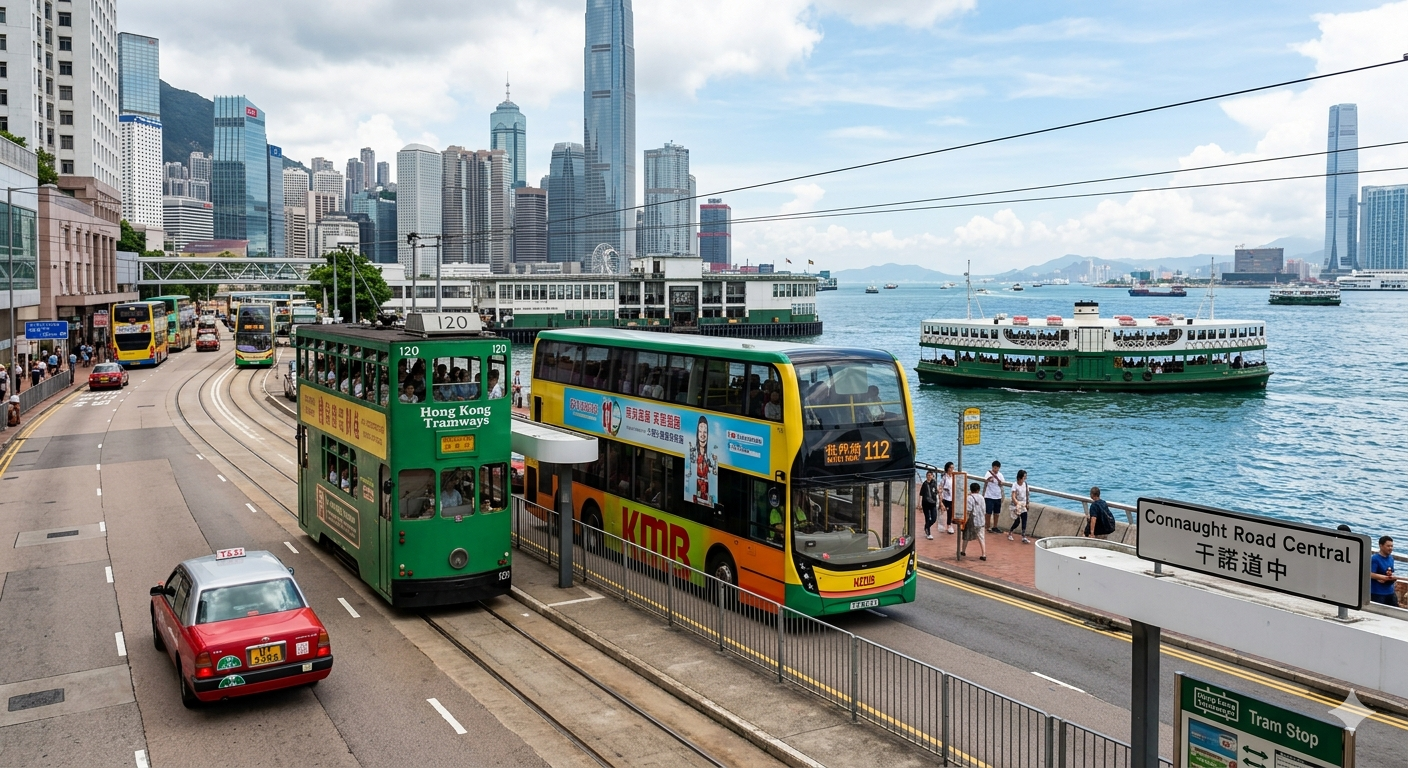
A unique visual capture, bringing together four of Hong Kong's most iconic forms of public transport in one dynamic frame: the green 'Ding Ding' tram, a modern double-decker bus, the historic Star Ferry, and a classic red taxi. This image is an AI-generated artistic visualization, created specifically to showcase these diverse transit options in a single view.
Getting Around Hong Kong by MTR
The MTR (Mass Transit Railway) is the fastest and most efficient way to travel around the city. For most tourists, this will be your main mode of transport.
The MTR connects major visitor areas such as Tsim Sha Tsui, Central, Mong Kok, and Causeway Bay within minutes.
Stations are clean, well-signposted, and announcements are in English and Cantonese. Even first-time visitors find it easy to navigate.
Why tourists love using the MTR:
Trains arrive every 2–4 minutes
Air-conditioned and clean
Clear route maps in every station
Affordable fares
Direct connection to major attractions
If you are searching for the easiest way to get around Hong Kong, the MTR is your best starting point.
Seeing the City by Bus
Hong Kong’s double-decker buses are not just transport — they are a sightseeing experience.
Unlike the underground MTR, buses allow you to see daily life, neighbourhoods, and scenic coastal roads. Sitting on the upper deck gives you a unique perspective of the city’s skyscrapers and mountains.
Buses are especially useful when:
Visiting beaches or hiking trails
Traveling to residential areas
Exploring routes not covered directly by the MTR
Enjoying scenic rides across Hong Kong Island
They are affordable, but during rush hour traffic can slow things down. If you are not in a hurry, buses are a great way to experience local Hong Kong life.
Taking the Ferry Across Victoria Harbour
One of the most iconic ways to get around Hong Kong is by ferry.
The historic Star Ferry crosses Victoria Harbour between Kowloon and Hong Kong Island. The ride is short, inexpensive, and offers one of the best skyline views in the world.
For many visitors, this becomes an unexpected highlight of their trip.
If you have more time, ferries also connect you to Hong Kong’s outlying islands such as:
Lantau Island
Cheung Chau
Lamma Island
These islands offer a slower pace, fresh seafood, beaches, and hiking trails — a completely different side of Hong Kong.
Exploring on Foot
Hong Kong is more walkable than many visitors expect. Once you arrive in a district, most attractions, markets, and food spots are within walking distance of each other.
Neighbourhoods like SoHo, Sheung Wan, Jordan, and Sham Shui Po are best explored slowly.
Walking allows you to:
Discover hidden temples
Find local bakeries and cha chaan teng cafés
Experience street markets
Observe everyday life
Many areas also have elevated walkways and covered paths, making it easier to explore even during hot or rainy days.
Taxis in Hong Kong
Taxis are convenient and relatively affordable compared to other major cities. They are colour-coded depending on the area they serve, but most tourists will use the red urban taxis.
They are useful when:
Traveling late at night
Carrying heavy luggage
Traveling in a small group
Going somewhere less accessible
However, traffic during peak hours can increase travel time, especially on Hong Kong Island.
Getting From the Airport to the City
Arriving at Hong Kong International Airport is smooth and organised.
The Airport Express train is the fastest way to reach Central in about 24 minutes. Public buses are cheaper but take longer. Taxis and private transfers are also widely available.
If you are staying in Kowloon or on Hong Kong Island, airport connections are straightforward and well signposted.
Practical Tips to Save Time and Money in Hong Kong
To make your travel experience smoother:
Get an Octopus Card for easy payments on transport and small purchases
Hong Kong operates on Hong Kong Time (HKT), which is UTC+8. If you are traveling from Europe, the Americas, or Australia, it helps to check Time.now before your trip so you can plan calls home or coordinate with family without confusion.
Plan your sightseeing by district
Combine walking with MTR rides for efficiency
These small strategies make a big difference, especially during short visits.
Final Thoughts
Learning how to get around Hong Kong as a tourist is simple once you understand the system. The city’s public transport is efficient, affordable, and designed for convenience.
From riding the MTR to crossing the harbour by ferry, transport here is not just practical — it’s part of the Hong Kong experience.
Add this to your Hong Kong to-do list:
Ride the MTR like a local
Take the Star Ferry at sunset
Sit on the top deck of a bus
Explore a neighbourhood on foot
Once you understand how the city moves, Hong Kong becomes easy to explore — and much more exciting to discover.