
AI Travel Planning vs Real Guides: What Works Best?
Travel planning has changed more in the last few years than it did in decades before.
Not too long ago, planning a trip to a city like Hong Kong meant taking time to research, reading guidebooks, or speaking directly with travel agents and tour guides. You might ask questions about the best time to visit Victoria Peak, how to get around efficiently, or where locals actually eat. It wasn’t instant—but it was grounded in real experience.
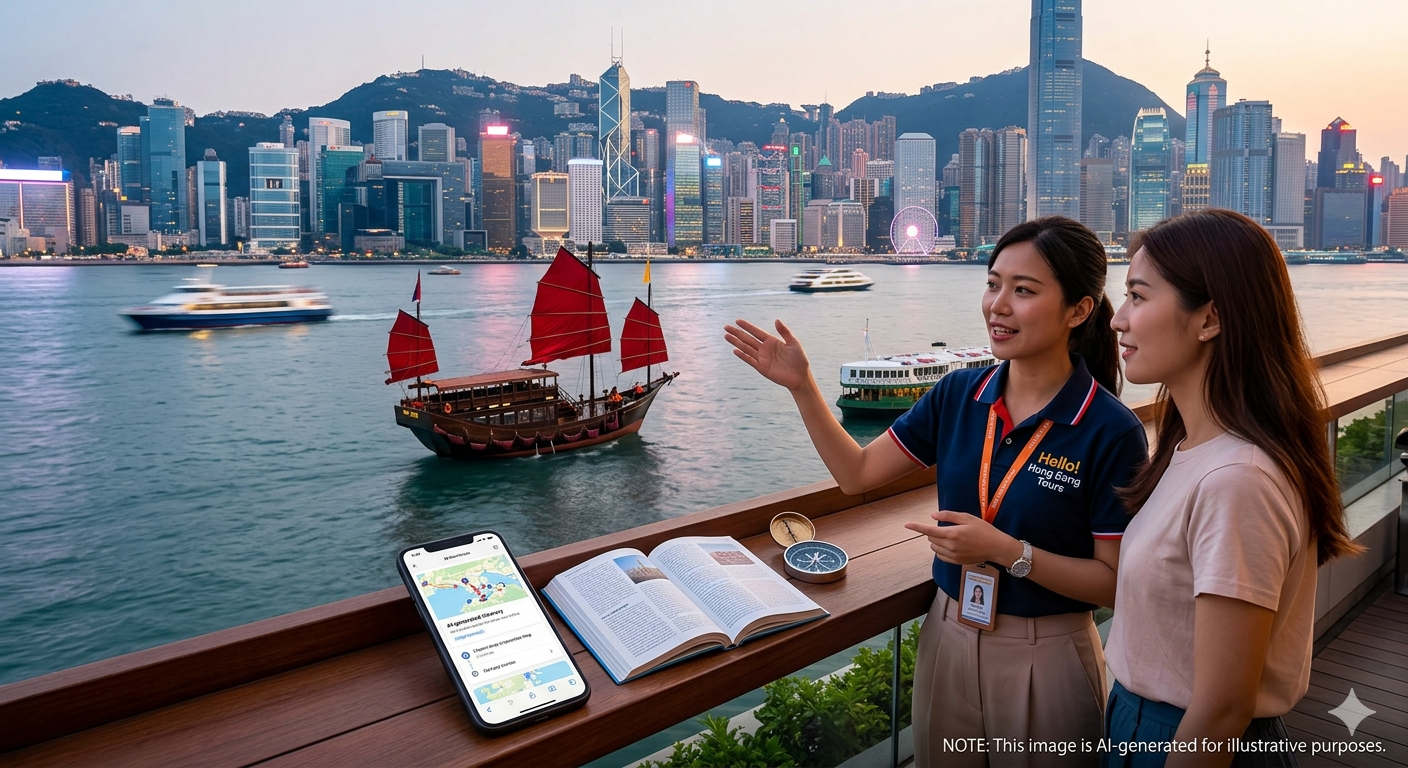
Today, everything is faster. With AI tools, you can generate a full Hong Kong itinerary in seconds. From Victoria Peak to street markets and dim sum spots, everything is neatly planned out for you with suggested timings.
It’s efficient. It’s convenient. And for many travelers, it feels like the smartest way to plan.
But here’s where things get more complex: travel is not just about efficiency—it’s about experience.
The Appeal of AI: Why So Many Travelers Use It
AI has become a popular starting point for planning a Hong Kong trip—and it’s easy to see why.
When visiting a fast-paced city like Hong Kong, the number of things to do can feel overwhelming. You have iconic attractions, hidden neighborhoods, outlying islands, and an endless list of food options. AI helps simplify this by quickly organizing everything into a structured plan.
For example, it might suggest starting your day at Victoria Peak, heading down to Central, exploring markets, and ending with a Star Ferry ride across the harbor. For a first-time visitor, this provides clarity and direction.
AI is also helpful for building a quick “Hong Kong to-do list.” It highlights the must-see places and gives travelers a sense of what’s possible within a limited timeframe.
At this stage, AI works well—as a foundation.
Where AI Starts to Fall Short
The challenge begins when that AI-generated itinerary is treated as a final plan.
Hong Kong is a city where distance and timing can be misleading. What looks close on a map may involve multiple transport changes, walking routes, or crowded areas. AI often underestimates these factors.
It’s common to see itineraries that try to fit too much into one day—visiting Central, riding the tram, exploring markets, and even heading to outlying areas without accounting for real travel time or energy levels. On paper, it looks efficient. In reality, it can feel rushed and exhausting.
Timing is another issue. AI may suggest visiting markets too early before they are fully open, or recommend popular restaurants during peak hours without considering long queues. These small details can significantly affect the flow of your day.
There’s also the question of authenticity. AI tends to recommend well-known spots, but Hong Kong’s real charm often lies in the smaller, less obvious places—local eateries tucked into side streets, neighborhoods with strong character, or viewpoints that aren’t crowded with tourists.
Without local insight, these experiences are easy to miss.
And when plans change—as they often do due to weather, crowds, or personal preference—AI cannot adjust in real time.
The Value of Speaking to a Real Guide in Hong Kong
This is where having a real guide, especially in a city like Hong Kong, becomes incredibly valuable.
A private guide doesn’t just follow an itinerary—they shape it based on real conditions and your personal interests. They understand how the city moves, when certain areas are busiest, and how to navigate efficiently between locations.
For example, instead of trying to cover everything, a guide may help you prioritize what matters most. If you’re a food lover, they might focus your day around local dining experiences. If you prefer scenic views and culture, they’ll adjust the route accordingly.
This kind of flexibility creates a more relaxed and enjoyable experience.
Local knowledge also plays a big role. A guide can take you beyond the typical stops and introduce you to places you wouldn’t easily find on your own—whether it’s a hidden food spot, a quieter street market, or a unique perspective of the city.
This is something many travelers experience when booking a private tour with Hello! Hong Kong Tours. Instead of following a fixed plan, the guide adapts the day based on your preferences, pace, and even real-time conditions like weather or crowd levels.
If it rains, the itinerary shifts. If a location is too crowded, alternatives are suggested. If you find a place you love, you’re not rushed to leave.
Beyond logistics, there’s also the human side of travel. Conversations with a guide—learning about Hong Kong’s culture, history, and daily life—add depth to your experience. It turns sightseeing into something more meaningful and memorable.
Final Thoughts
Travel today is easier to plan than ever before—but ease doesn’t always guarantee quality.
AI offers speed and convenience, but it often lacks the real-world understanding needed to create a seamless travel experience—especially in a dynamic city like Hong Kong. On the other hand, human expertise brings flexibility, local insight, and genuine connection.
The best trips often come from combining both: using AI to plan, and real people to perfect the experience.
Because at the end of the day, travel isn’t just about ticking off places—it’s about how those moments come together to create something you’ll actually remember.